


Description
Author: Allen Ginsberg
Editors: Juanita Lieberman-Plimpton and Bill Morgan
Publisher: Da Capo Press
Place: Cambridge, Massachusetts
Year: 2006
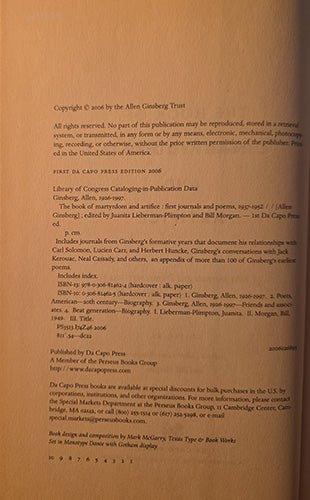
Edition: First Da Capo Press Edition; First Printing
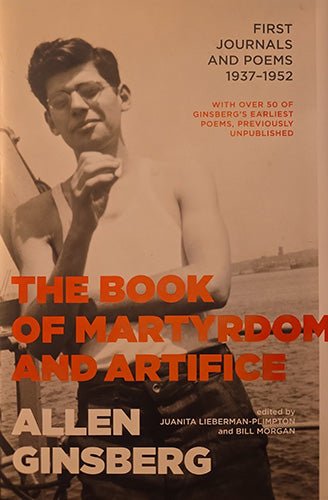
Format: Hardcover with original dust jacket
Page Count: xviii, 523 pages
Condition: Like New. An exceptionally clean, fresh copy that appears unread. The binding is tight, the pages are clean and unmarked, and the original photographic dust jacket is crisp and bright, with little to no visible wear. The complete number line ending in 1 confirms the first printing. Protected in brodart archival covering.
Description:
Before Allen Ginsberg became one of the defining voices of the Beat Generation, he was an intensely observant boy and young man recording his emerging identity, literary ambitions, emotional conflicts, and encounters with the people who would transform American culture.
The Book of Martyrdom and Artifice gathers Ginsberg’s earliest surviving journals and poems, beginning in 1937, when he was eleven years old, and continuing through 1952. These candid writings trace his development from an intellectually precocious child in Paterson, New Jersey, into the poet who would later write “Howl” and become an internationally recognized literary and countercultural figure.
The journals encompass the formative years during which Ginsberg met Jack Kerouac, William S. Burroughs, Lucien Carr, Carl Solomon, Neal Cassady, and Herbert Huncke. They reveal the young writer’s developing ideas about poetry, artistic identity, sexuality, mental illness, politics, family, spirituality, and his emerging sense of vocation.
Edited by Juanita Lieberman-Plimpton and noted Ginsberg archivist and bibliographer Bill Morgan, the volume includes black-and-white photographs and an appendix containing more than fifty of Ginsberg’s earliest poems, previously unpublished. Ginsberg considered the journals so intimate that he stipulated that they be published only after his death.
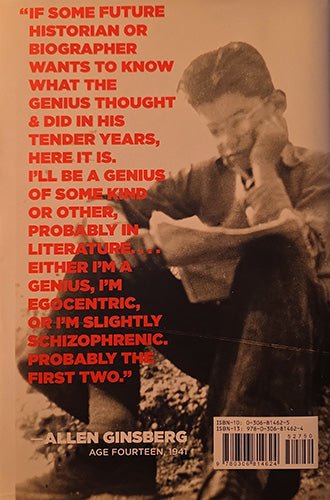
This is the desirable first Da Capo Press edition and first printing, identified by the complete number line ending in 1. It retains its striking original photographic dust jacket and is exceptionally well preserved.
Why we love this book:
This is more than a collection of early writings—it is an intimate record of a major American poet discovering who he was and what kind of artist he might become. The journals provide a revealing prehistory of the Beat Generation while capturing the vulnerability, self-questioning, and fierce literary ambition behind Ginsberg’s later public persona. The first printing, original jacket, previously unpublished poems, and remarkable condition make this an especially appealing copy for a collector of American literature and cultural history.