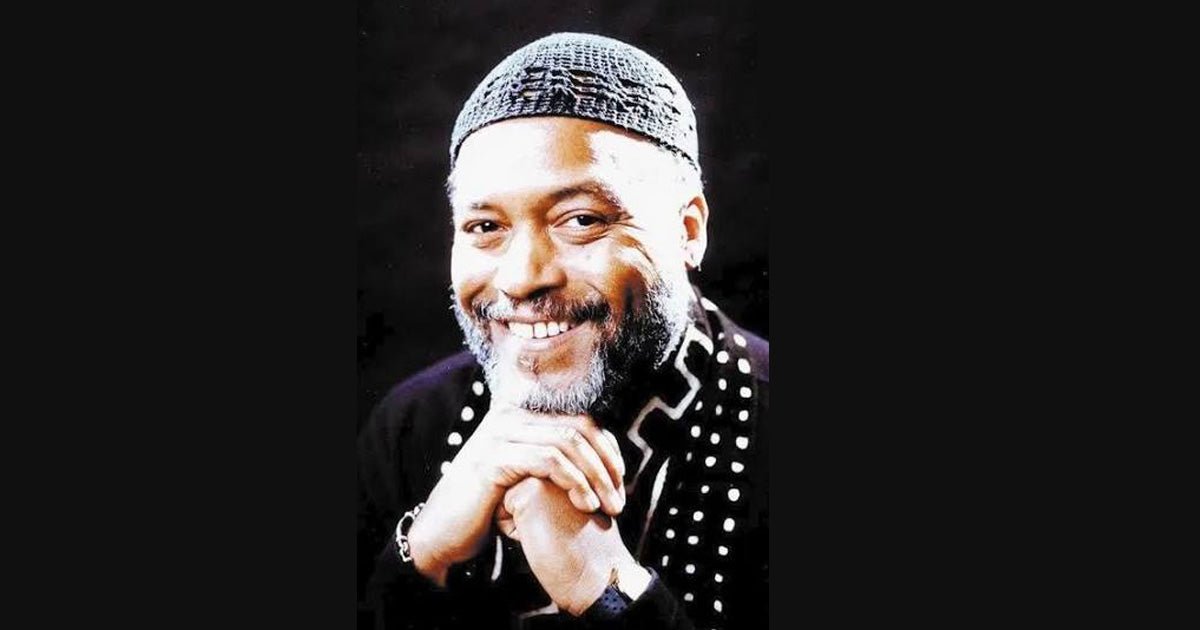
To hold a book from the personal library of a writer is to step directly into the workshop of their mind. When that writer is the late poet, professor, and activist Everett Hoagland, those books become something even greater: a roadmap of a lifelong quest for human unity, artistic mastery, and social justice.
I really didn’t know anything about this man until after his passing. As a bibliophile aspiring to find rare treasures, I happened upon the estate of Doane Perry, a well-respected anthropologist and African studies professor who gained his love of Africa from his early time spent in the Peace Corps. After his passing, his wife was overloaded with what she and her husband had collected over a lifetime. She was more than happy for me to take the books in exchange for a donation to her arts organization.
What I didn’t know at the time was that Doane Perry was close friends with Everett Hoagland and, after Hoagland’s passing, had acquired his entire working library. It was only my gut and nose for book treasures that led me to say, “I’ll take everything.”
I packed all the books into boxes and took them home, where they stayed for over a year until I finally had the time to dig through them. As I have been carefully protecting them in archival sleeves and Brodart, I decided to learn more about the intriguing collection of literature that Hoagland had gathered throughout his lifetime. Some of the books have his personal margin notes from class preparation, and I have yet to see everything hidden in the boxes.
But there is an undeniable energy that comes with this collection. Something very deep and special resides here; I can feel his absolute love of words and his deep passion for humanity. My immediate concern, to be honest, was to see if my gut response to him was right. I was not disappointed. My research revealed that his work and teaching were foundational to the Black Arts Movement. He spent decades bridging the worlds of literature and activism. But beneath his sharp, rhythmic verse lay a profound spiritual engine.
A Lifelong Interfaith Journey Reflected in Verse
Evidently, Hoagland’s poetry reflected a lifelong interfaith journey—a reality that couldn’t be more up my alley. Research shows that to truly understand Hoagland’s poetry, you must understand his spiritual evolution. As the author of the book Spiritual Writing from Inspiration to Publication, I firmly believe that poetry and art are always outward reflections of one’s inner spiritual journey. The spiritual path and the writer’s journey are permanently intertwined.
After reading about his life, I realized my acquisition of his library and learning about him was not an accident. It makes me feel even more honored to be the caretaker of his bibliographic legacy—and honestly, it makes it incredibly difficult for me to part with it.
From what I learned about Everett Hoagland, he did not view the world through an insular lens; instead, his worldview was shaped by a profound search for universal truth. For nearly a decade, Hoagland aligned himself with the Baha'i Faith, a tradition deeply rooted in the essential unity of all humankind and the spiritual oneness of all major world religions.
Later in life, his spiritual path led him to Unitarian Universalism. He deeply internalized its core tenet: a fierce belief in the "interconnected web of all existence." These were not passive theological commitments. For Hoagland, faith was a call to action. He championed a "oneness-in-diversity," using his spiritual framework to build cross-cultural coalitions. In a world fractured by racial and religious divisions, his books and verses remind us that our struggles are fundamentally bound together.
Poetry as a Sacred Bridge
I am a creative writer, but my own work is largely focused on creative nonfiction and memoirs. I am a storyteller at heart and have only tried to write poetry a few times in my life, but my sensibility about the craft is changing just by being around these texts.
I only wish I could have been in the classroom with Everett Hoagland at the University of Massachusetts Dartmouth or standing on stages across the country where he recited his powerful poem "Invocation." It reads beautifully like a cross-cultural prayer, written to help humans "see ourselves in all creation, and all creation in ourselves, ourselves in one another."
Why His Library and Message Matter Today
We live in an era heavily marked by cultural polarization and a deep yearning for authentic connection. This makes Hoagland's philosophy incredibly urgent. He left behind a clear moral imperative for modern artists and readers alike at the end of "Invocation":
"edit our thought so our ethics are our politics, / and our actions the afterlives of our words."
Hoagland’s personal working library represents the exact texts that inspired this philosophy. For collectors, institutions, and passion-driven readers, owning a piece of this library is an invitation to carry his work forward. It is a reminder that our ethics must jump off the page and into our daily lives, ensuring that we continue to fight for equity, compassion, and a deeply interconnected world.
I see myself strictly as a curator and caretaker of this collection, and I am highly tempted to keep it. But if I kept all the books that touch my soul, they would never have a chance to go out and inspire others.